
Equine Tensegrity Balancing Therapy
Equine Tensegrity Balancing Therapy applies the principles of tensegrity to equine bodywork. Tensegrity describes how tension and compression work together throughout an interconnected structure to provide stability, adaptability and efficient force transfer.
In the horse’s body, fascia, muscles, bones and joints do not function in isolation. They form an interconnected system in which changes or restrictions in one area can influence tension, balance and movement elsewhere.
This approach considers these relationships to explore compensation patterns and support more balanced movement throughout the body.
( Level 1 Student )
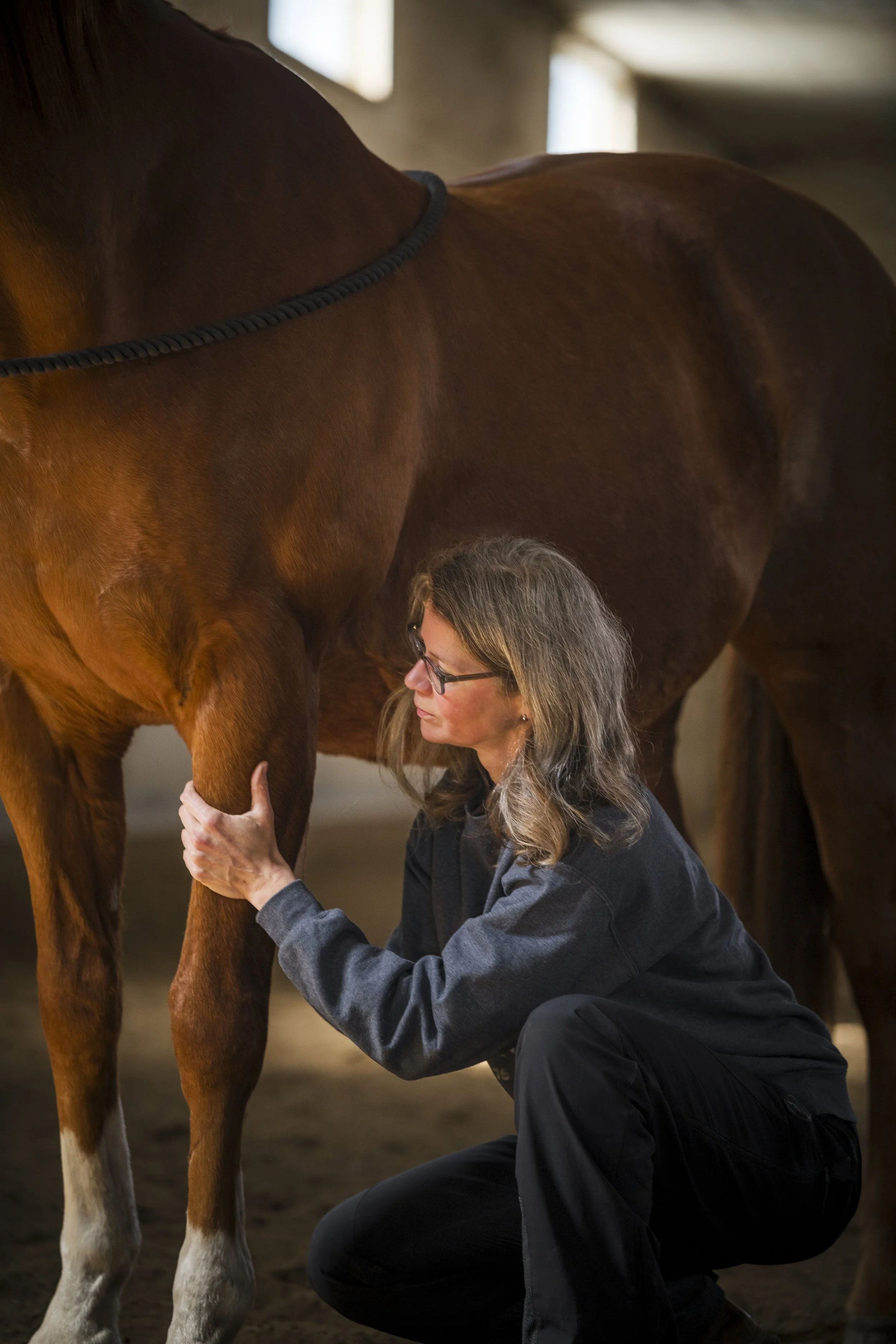
How This Approach May Support Your Horse
Whole-body compensation patterns — Exploring how restrictions in one area may influence posture and movement elsewhere.
Structural balance and force transfer — Considering how tension is distributed throughout the body and how forces are transferred during movement.
Movement and performance — Supporting mobility and movement quality by considering the body as an interconnected whole.
Body awareness — Supporting the horse’s awareness of posture and movement through individualized bodywork.
Where appropriate, you’ll receive individualized exercises or activities to support movement between sessions.

DISCLAIMER:
Equine bodywork is intended to complement, not replace, appropriate veterinary care. The Equine Bodyworker does not diagnose medical conditions, prescribe medications or supplements, or perform chiropractic adjustments.
If your horse is recovering from an illness, injury, surgery or lameness, or is experiencing intermittent lameness, please obtain veterinary clearance before scheduling bodywork or introducing related exercises. Your veterinarian can help determine whether bodywork and any planned activity are appropriate for your horse.
The horse's health, comfort and well-being remain the priority throughout every session.